
New Documentary Chronicles 400 Years of History Behind Newbury’s Kennet Centre
A new in-depth YouTube documentary traces the full rise and fall of the Kennet Shopping Centre — from medieval industry to modern planning battles over the Eagle Quarter site.
15/02/2026
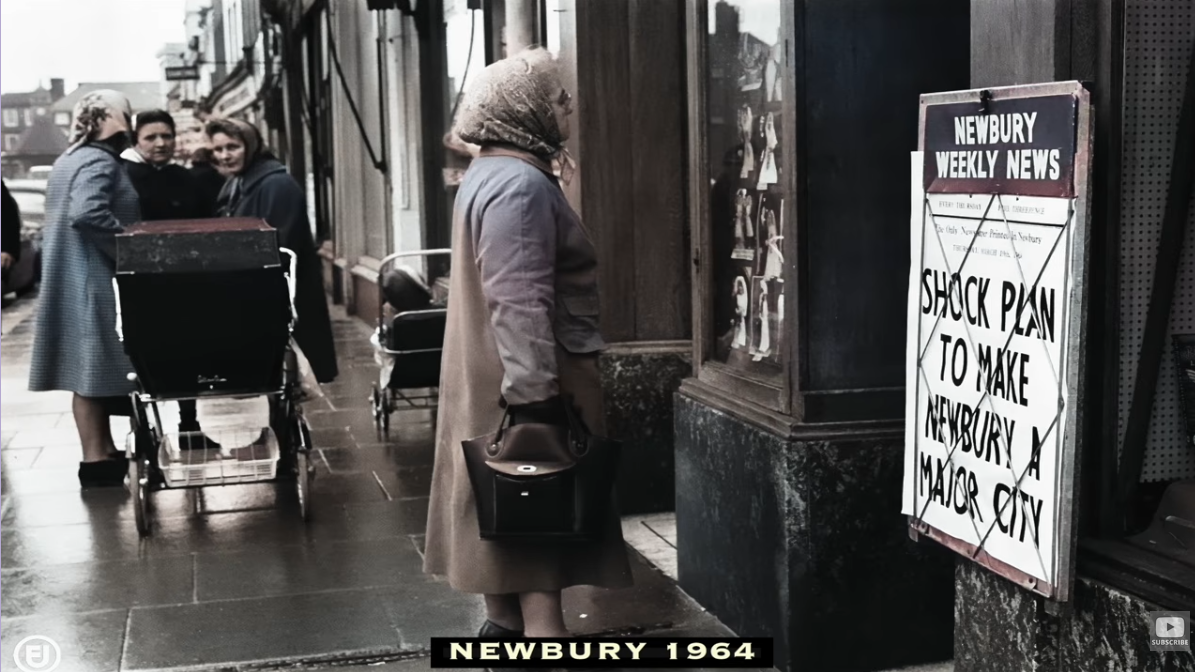
A newly released YouTube documentary has cast a detailed spotlight on one of Newbury’s most contested and consequential sites — the former Kennet Shopping Centre and the wider Eagle Triangle.
Described as one of Britain’s most striking examples of a modern “dead mall”, the film explores more than 400 years of history on the land between Bartholomew Street and Cheap Street, charting a journey from medieval industry to 21st-century regeneration battles.
From Industry to Demolition (1600s–1966)
Long before concrete walkways and shuttered shopfronts, the area was a working industrial district. The documentary traces the Eagle Triangle’s roots in cloth production, dye works and later the Eagle Iron Works — industries that helped power Newbury’s economy for centuries.
Through archival research and historic mapping, the film revisits long-lost streets and workshops that disappeared during post-war clearances. Much of this built heritage was removed in preparation for modern retail development, marking the first dramatic transformation of the site.
The Arrival of “The Mall” (1972)
The late 1960s and early 1970s brought sweeping change. Newbury’s first Sainsbury’s supermarket arrived, historic streets were demolished, and in 1972 “The Mall, Newbury” opened as a bold experiment in enclosed shopping.
For many residents, this marked the beginning of a new retail era. The documentary highlights how shopping habits shifted permanently during this period, reshaping the commercial gravity of West Berkshire.
The Kennet Centre’s Golden Years (1984–1990s)
In 1984, the development was dramatically expanded and rebranded as the Kennet Shopping Centre. With glazed walkways, a multi-storey car park, cafés, banks, department stores and later a multiplex cinema, it quickly became Newbury’s social and commercial heart.
At its peak during the 1990s, the centre thrived with constant footfall. For a generation of residents, it was not just a place to shop but a place to meet, work and spend time.
Structural Decline (2000–2021)
The 21st century brought forces that would prove decisive.
Out-of-town retail parks drew shoppers away from the high street. The 2008 financial crisis weakened retail resilience. Online shopping accelerated. Then COVID-19 lockdowns delivered a final blow.
By 2020, the documentary shows a haunting contrast to the centre’s heyday: empty units, shuttered entrances and silent corridors. The Kennet Centre had become what urban explorers term a “dead mall” — a visible symbol of changing economic realities across Britain’s towns.
The War of the Eagle Quarter (2020–2026)
The film devotes significant attention to what it describes as one of the most dramatic planning battles in modern Berkshire history.
Between 2020 and 2026, proposals to demolish the centre and replace it with the Eagle Quarter redevelopment triggered years of dispute involving West Berkshire Council, developers Lochailort, planning inspectors and local campaigners.
Political tension, heritage objections, redesigns and appeals shaped a prolonged struggle over building height, architectural character and the future identity of Newbury’s historic core. The documentary presents this as a defining chapter in the town’s recent history — a clash between competing visions of regeneration.
A New Vision: The Old Town Development
As the Kennet Centre era comes to an end, the documentary concludes with a look toward the Old Town Development proposal.
This alternative regeneration concept aims to reconnect lost medieval street patterns and reintroduce traditional market town architecture at a more human scale. Supporters argue it could restore historic character while delivering housing and economic renewal. Critics question deliverability, viability and whether lessons from past redevelopment cycles have truly been learned.
The film poses a central question: can Newbury balance heritage, housing needs, sustainability and commercial vitality — or is the town destined to repeat earlier mistakes?
Why This Story Resonates
More than a local planning story, the documentary frames the Kennet Centre as a mirror of broader national trends — from industrial decline and post-war modernism to online retail disruption and the struggle to reinvent Britain’s high streets.
For many residents, the centre shaped childhoods, weekend routines and working lives. Its disappearance marks not just a physical transformation, but the end of a shared chapter in Newbury’s social history.
As demolition and regeneration move forward, the film stands as a digital record of what once stood at the centre of town — preserving memories before they are replaced by a new vision of Newbury’s future.
Source: YouTube Documentary